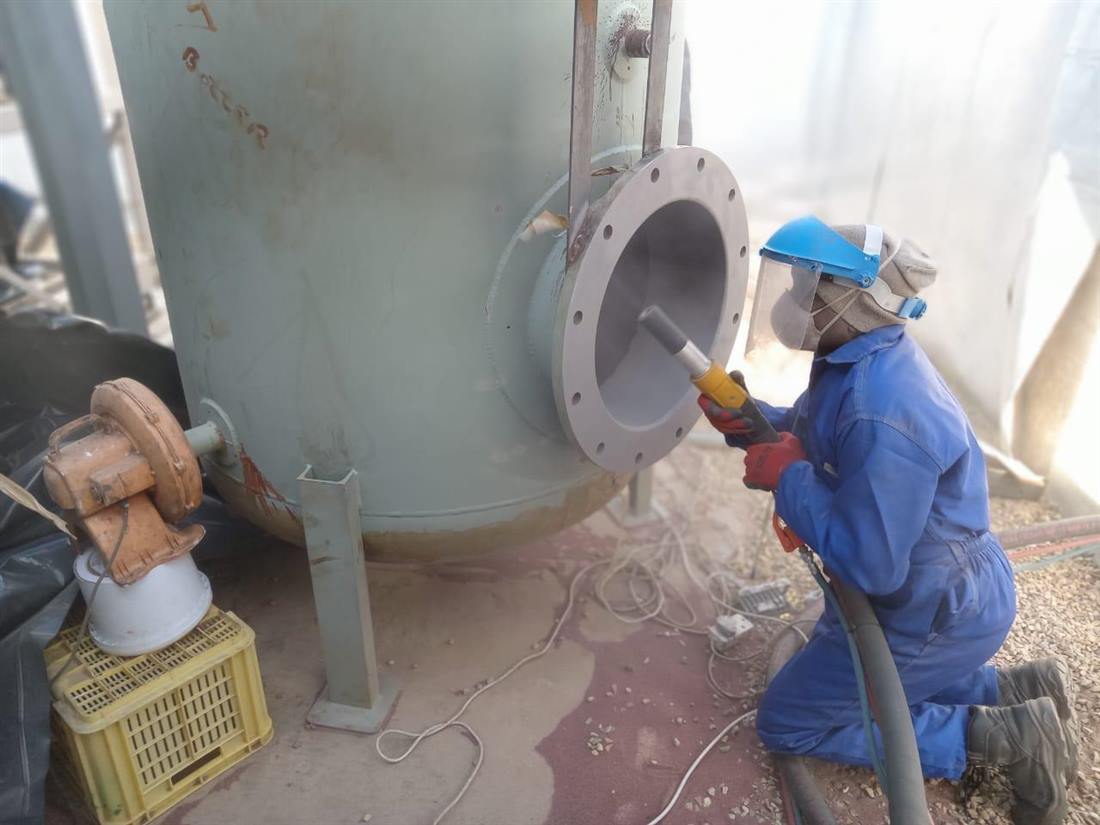
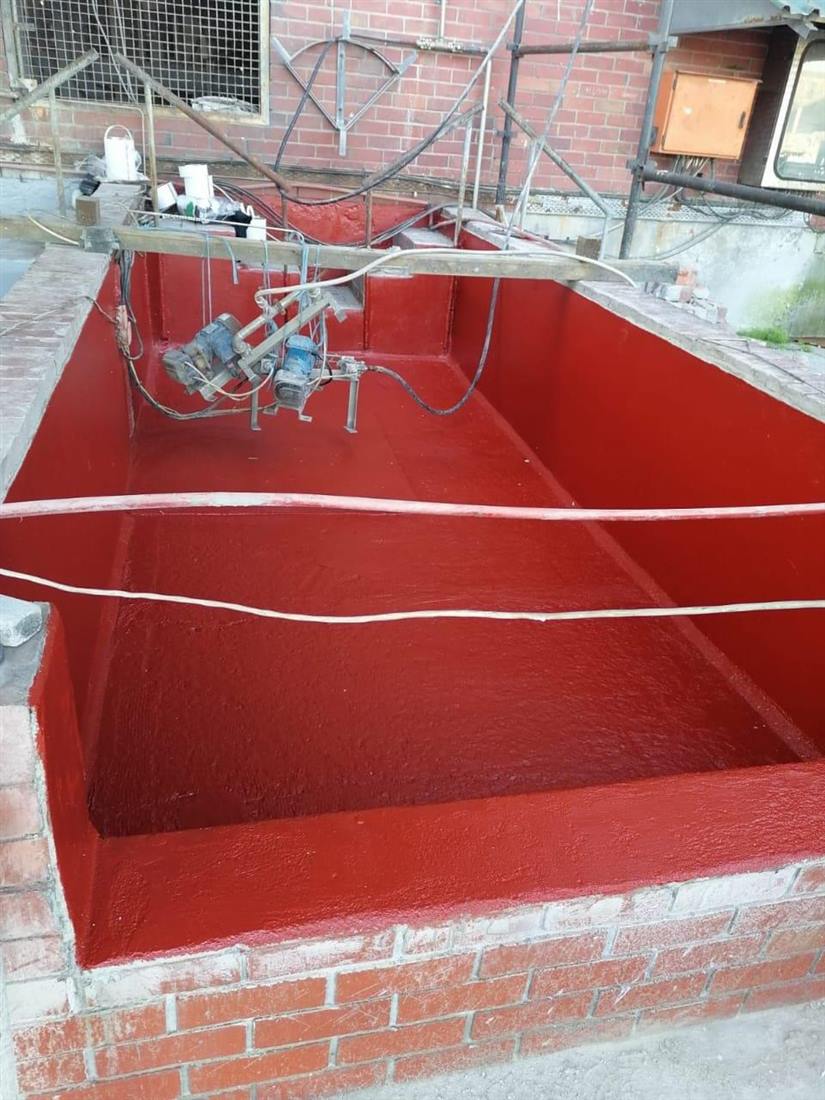
"Just epoxy it" is common advice for protecting steel. But epoxy covers a huge family of coatings, and for immersed or chemical service the choice of system matters enormously. Glass flake is one of the most effective options, but it is not always necessary.
How standard epoxy protects
A high-build epoxy forms a dense film that keeps water and oxygen away from the steel. In atmospheric or occasional-splash conditions it performs very well, and it is the backbone of most corrosion coating systems.
What glass flake adds
Glass flake coatings carry thin glass platelets that lie flat and overlap within the film. Moisture has to wind around every flake to reach the steel, which greatly increases the effective barrier. For permanently wet surfaces such as tank interiors, pump volutes and pipe bores, this means much longer protection.
A quick rule of thumb
- Atmospheric or splash exposure: a high-build epoxy system is usually enough.
- Permanent immersion in water: glass flake is a strong upgrade.
- Chemical immersion: glass flake in a chemically suitable resin, often vinyl-ester. See chemical-resistant linings.
- Abrasive slurry: a ceramic-filled wear coating, sometimes over a glass flake base.
Whatever the system, surface preparation decides success. A premium lining over a poorly blasted surface will fail sooner than a basic one applied properly.