Matching the coating to the chemical
There is no single "chemical-resistant" coating. A lining that shrugs off caustic soda may soften in a solvent. One that handles sulphuric acid at room temperature can blister at 60 °C. Before we quote, we ask what is in the line, at what concentration, at what temperature and how often it is cleaned. Then we choose from epoxy novolac, vinyl-ester and glass-flake reinforced systems accordingly.
This is the step most general painting contractors skip, and it is the reason chemical linings fail early.
Where we use chemical-resistant linings
Our clients include food and beverage plants in Paarl, Wellington and Stellenbosch running CIP (clean-in-place) chemicals, water and wastewater works dosing chlorine and ferric chloride, and manufacturers in Epping, Blackheath and Atlantis handling plating, pickling or effluent streams. Typical items are:
- Dosing and transfer pumps
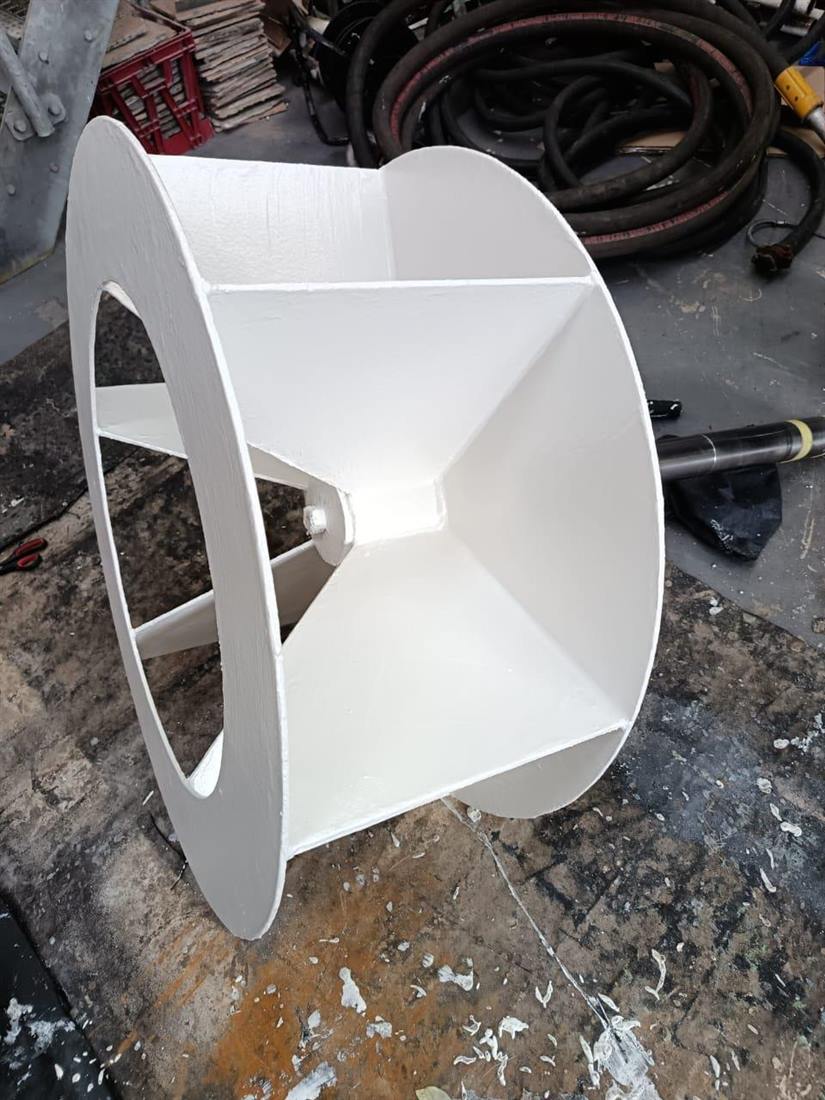
- Fume extraction fan housings and ducting
- Valve bodies and discs
- Bund walls, sumps and small tanks
- Scrubber internals
Surface preparation decides everything
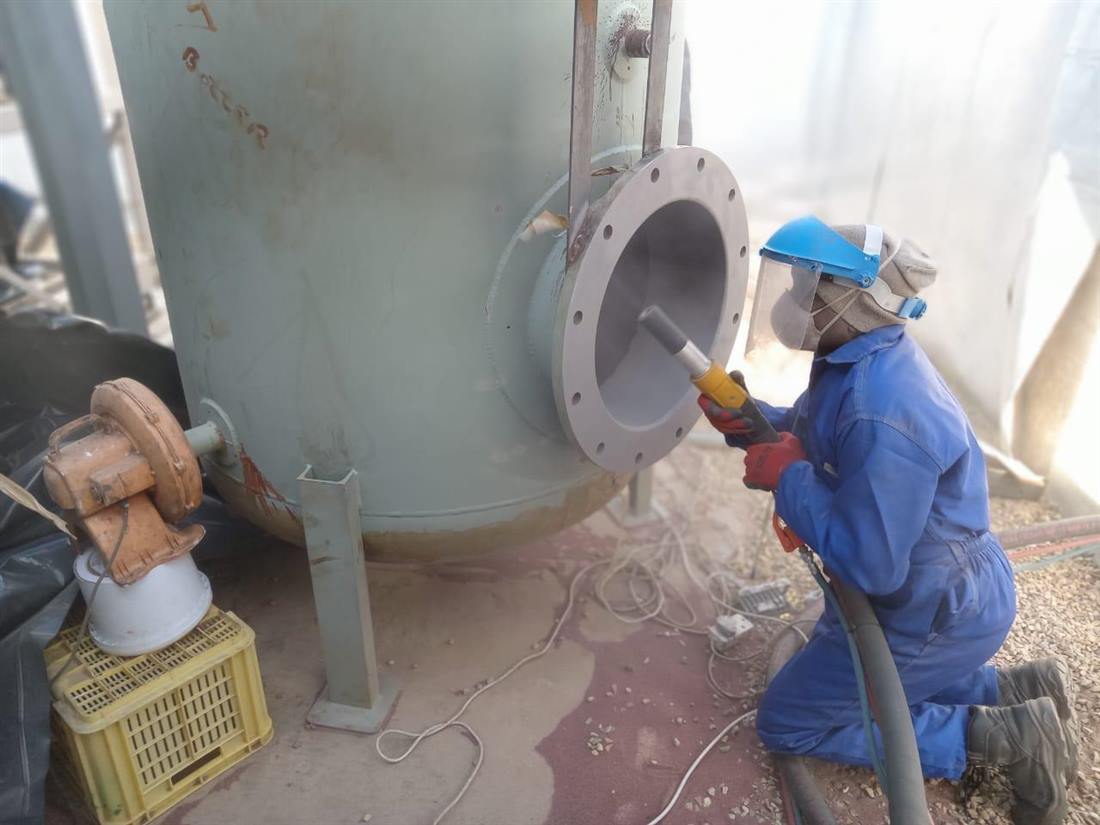
Chemical linings are unforgiving of contamination. Salts and residues trapped under the coating draw moisture through the film and cause blistering. We decontaminate, blast to a clean anchor profile and apply within the window before flash-rust or contamination can return. Thickness is checked across the whole surface, because chemical attack always starts at the thinnest spot.
For combined chemical and abrasive service, such as slurry with low pH, we often specify a glass-flake lining for its very low permeability.
Chemical-Resistant Coating across the Western Cape
We provide chemical-resistant coating from our Bellville workshop to clients throughout the region, including Bellville, Cape Town CBD, Parow & Goodwood, Epping Industria, Montague Gardens, Milnerton, Durbanville, Brackenfell, Stellenbosch, Paarl, Saldanha Bay, George.