Why glass flake works
All organic coatings are slightly permeable. Over time, water molecules work their way through the film, and once they reach the steel, corrosion starts underneath. Glass flake does not stop this completely, but it dramatically lengthens the path. That is why it performs so well in permanently wet service: pump volutes, tank interiors, sumps, pipe bores and water-box heads.
The flakes also add toughness and resistance to impact and moderate abrasion, which is helpful where solids are present.
Glass flake applications we handle
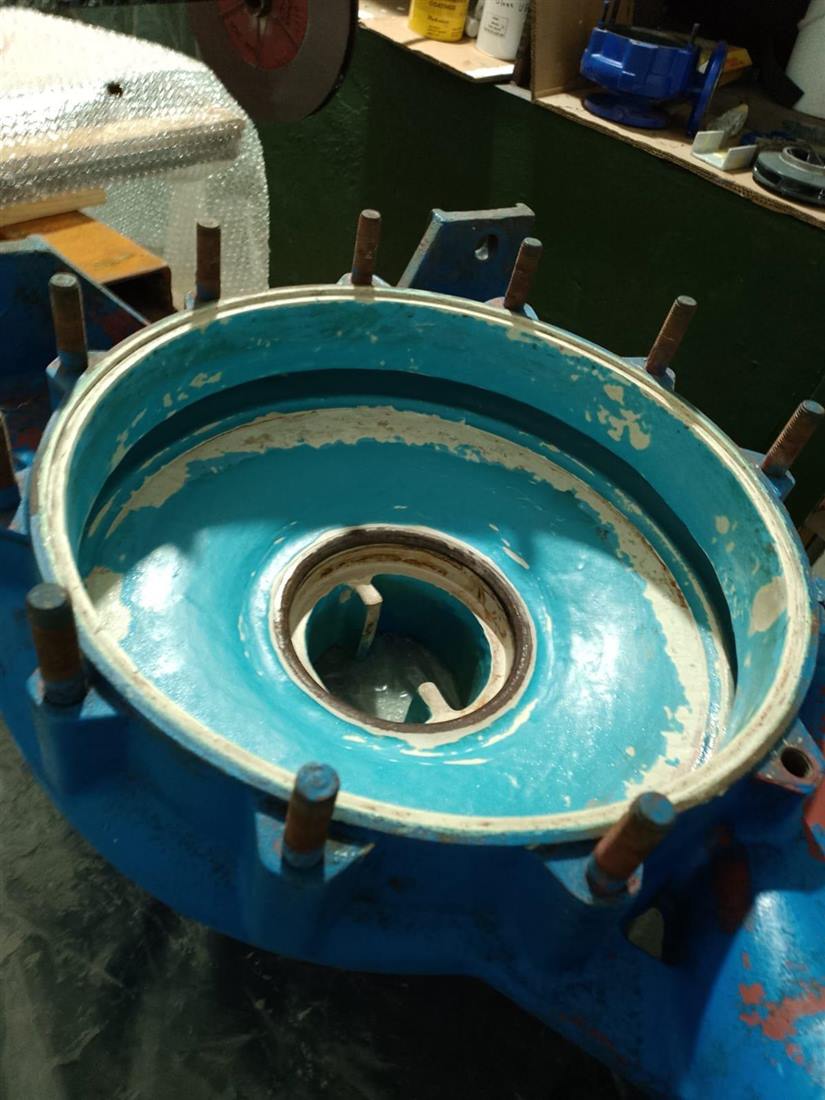
- Pump volutes and suction covers
- Water and effluent tank internals
- Spool pieces and large-bore pipe internals
- Cooling water boxes and heat exchanger channels
- Sumps, pits and concrete bunds (with suitable primers)
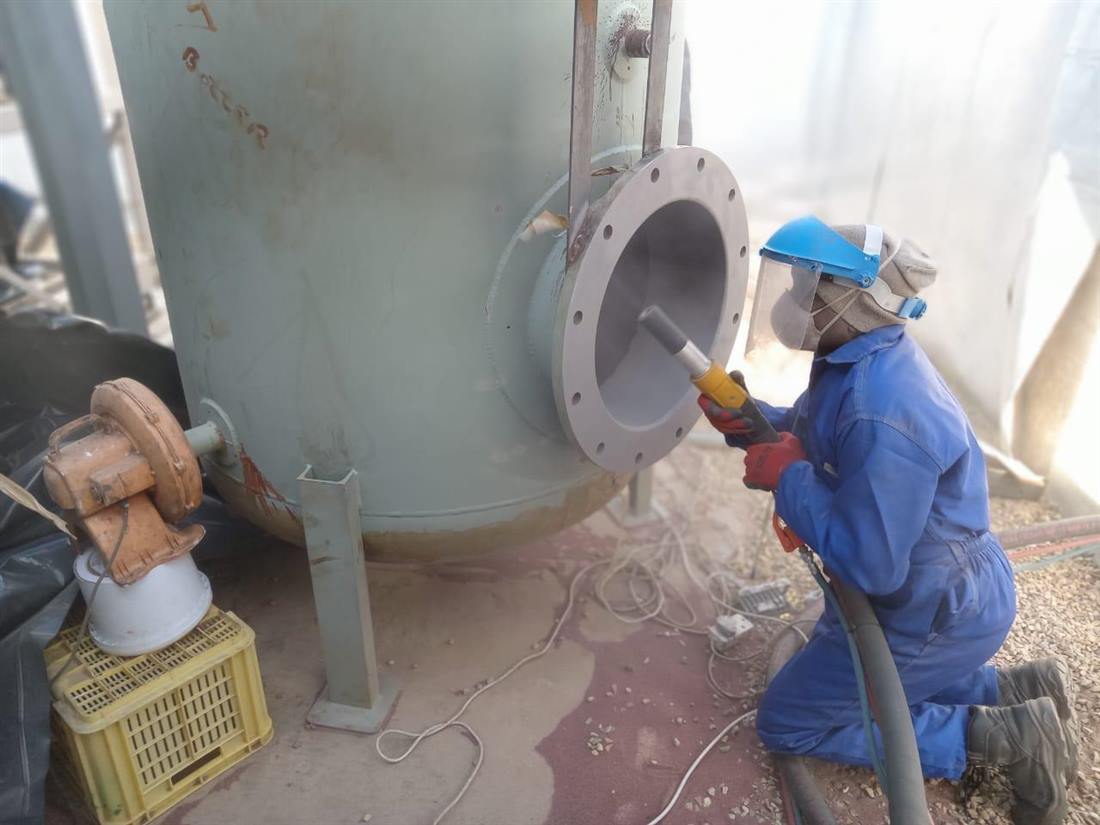
Our projects gallery includes a tank lined in red glass flake and several pump volutes finished in high-build blue systems.
Getting the application right
Glass flake linings are thick, often hundreds of microns per coat, and need careful roller or spray technique so the flakes lie parallel to the surface. Applied badly, flakes stand on end and the barrier effect is lost. We apply in controlled workshop conditions, check film thickness and inspect for holidays (pinholes) on critical linings before the item leaves.
For aggressive chemical service, glass flake can be specified in vinyl-ester resin. See chemical-resistant coatings.
Glass Flake Coating across the Western Cape
We provide glass flake coating from our Bellville workshop to clients throughout the region, including Bellville, Cape Town CBD, Parow & Goodwood, Epping Industria, Montague Gardens, Milnerton, Durbanville, Brackenfell, Stellenbosch, Paarl, Saldanha Bay, George.